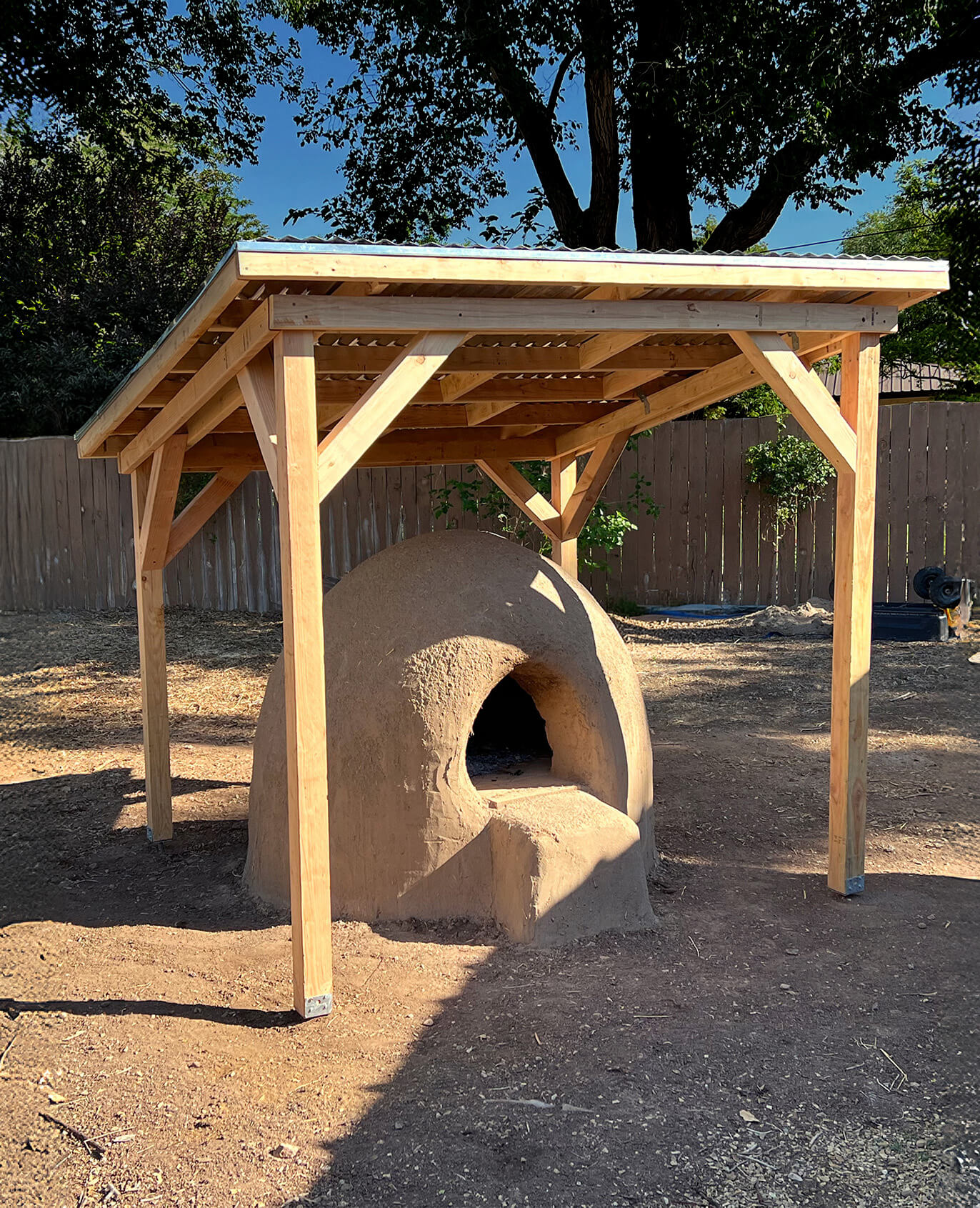
Horno workshop with the Semilla Project
Community workshop in Jemez Springs
Horno workshop with the Semilla Project
Community workshop in Jemez Springs
Jemez Springs Horno Build
Eye of the Horno, led by builder Amaury Bargioni, partnered with The Semilla Project in early December to lead a week-long Horno Building Workshop. The workshop was held at The Semilla Project's retreat property in Jemez Springs — the space where the organization gathers, a fitting home for a horno built to nourish the community for years to come.
The partnership was a natural fit: Eye of the Horno is dedicated to sharing its passion for earth-building and wood-fired cooking through horno building services and community workshops, while The Semilla Project is dedicated to developing the next generation of community leaders through land-based, culturally-grounded learning. Building a horno by hand, together, over 5 days, is exactly the kind of hands-on, land-rooted work both organizations are built around.
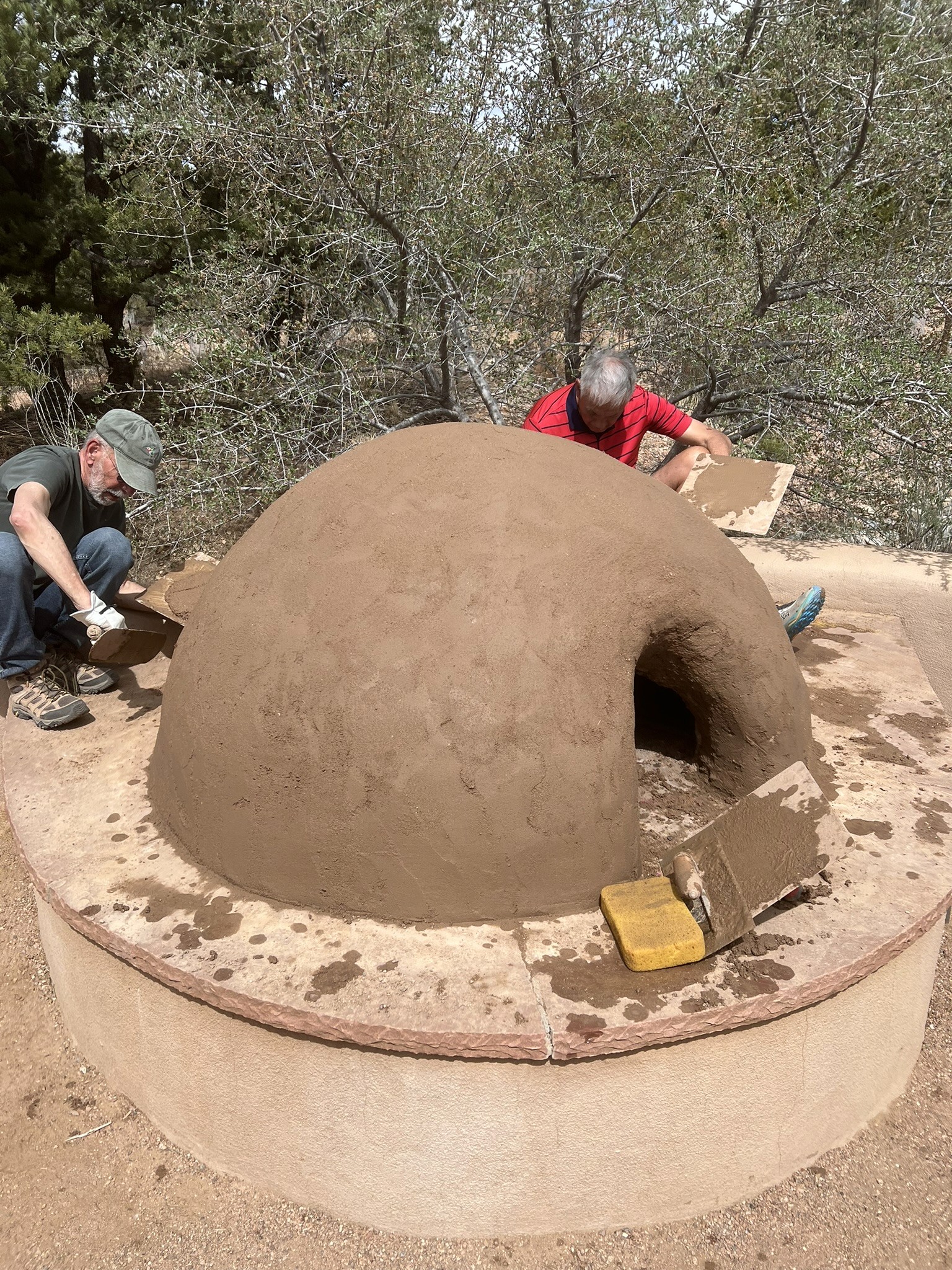
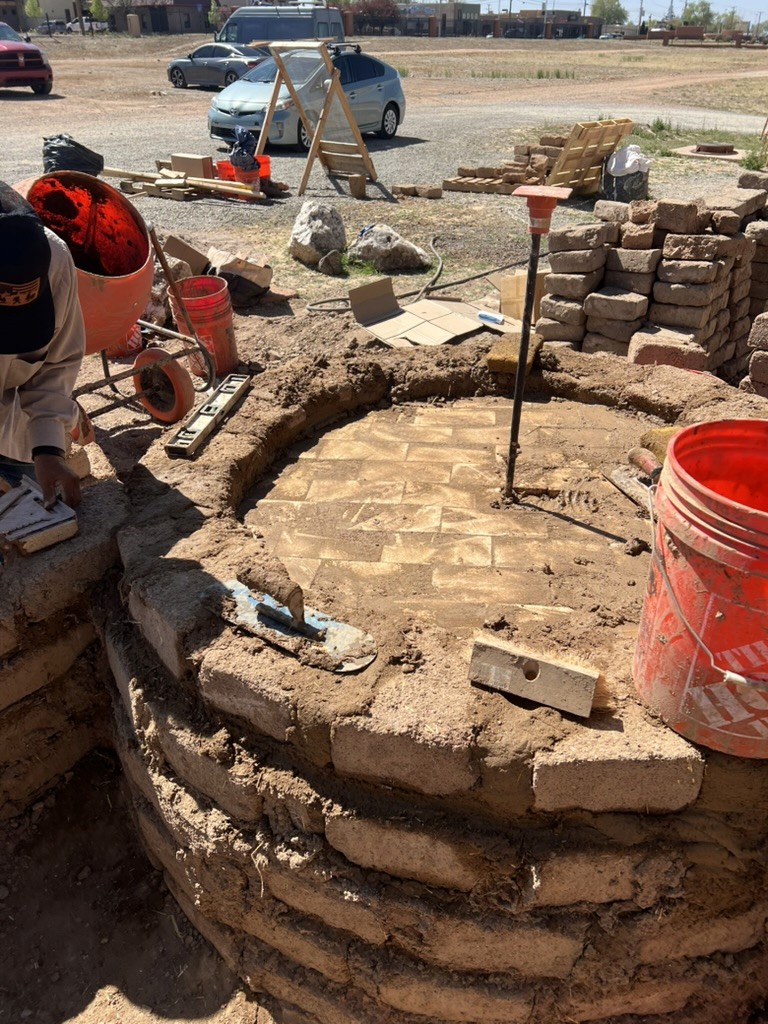
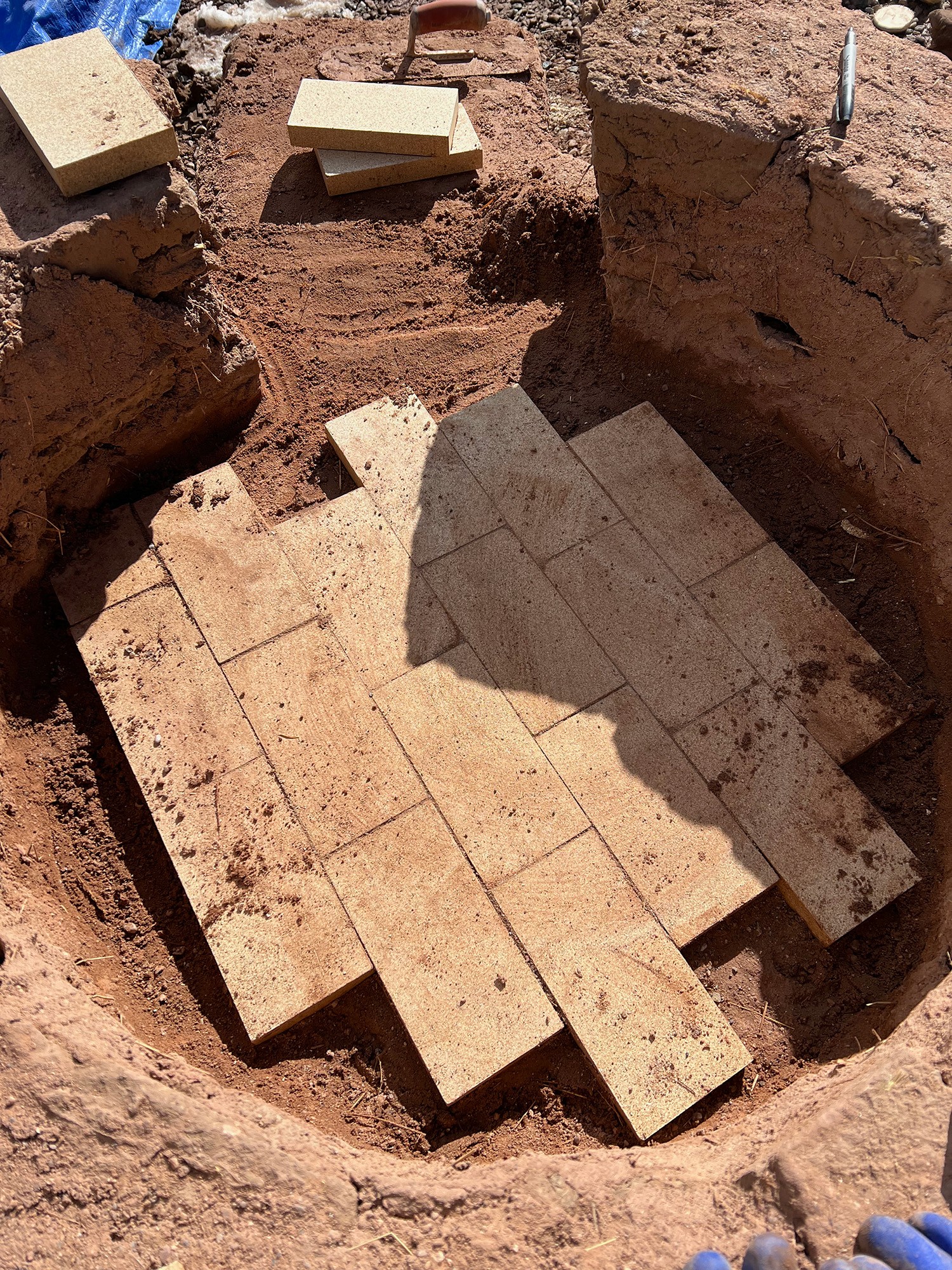
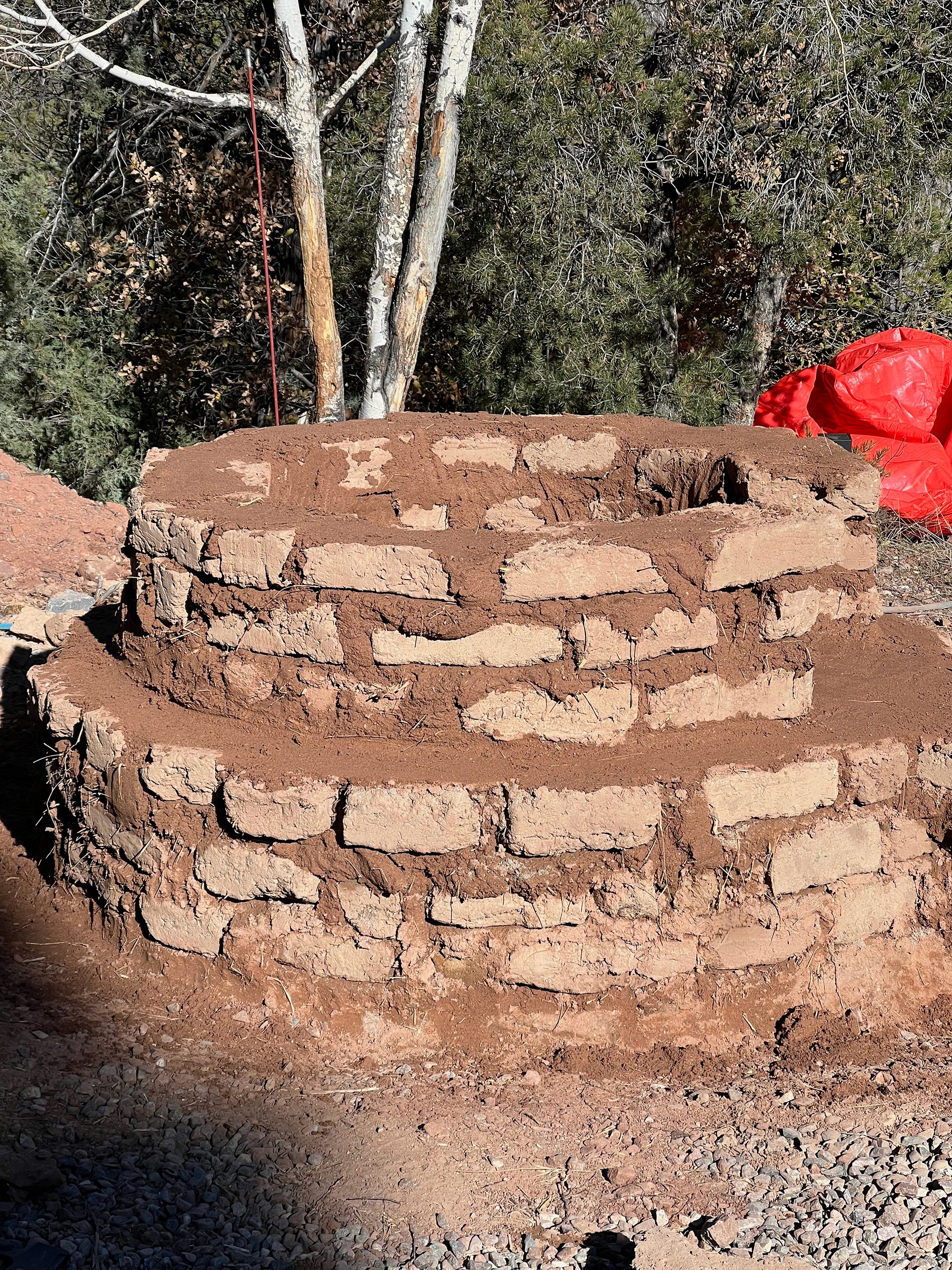
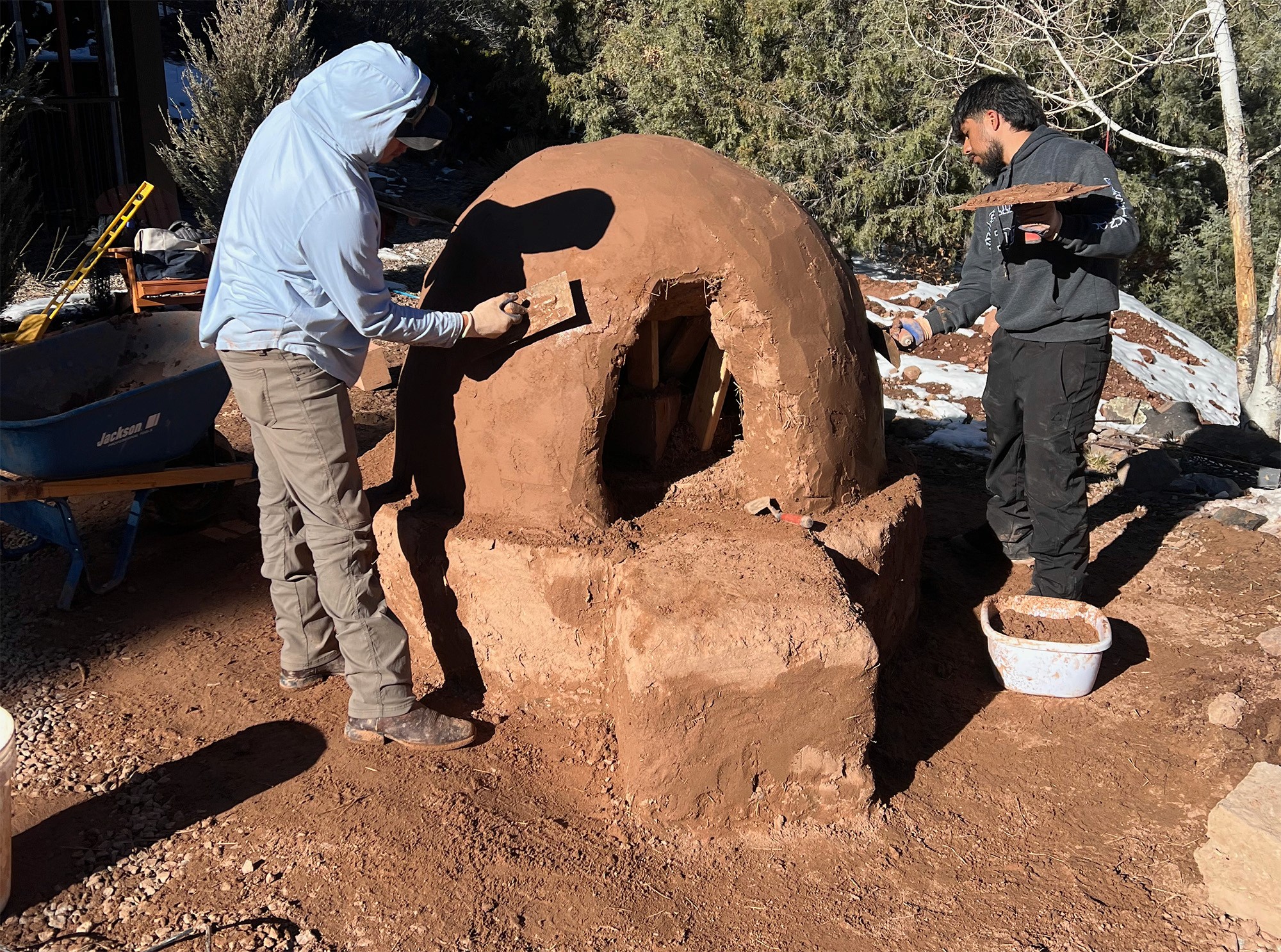
Around 5 to 8 participants took part in the workshop, most of them interns from The Semilla Project, along with a few community members — some traveling from as far as Albuquerque — who came out to join in. Together the group worked through every stage of building a horno by hand — digging and pouring the foundation, building and filling the base, and raising the walls course by course until the dome took shape.
Building in December meant working around the cold — and keeping the horno from freezing overnight. The adobe bricks themselves were already fully cured, but the mud mortar holding each course together was still fresh and wet as the walls went up. If that mortar froze and expanded before it had a chance to dry and bond the bricks together, it could crack, weakening the joints between courses. That's a big part of why adobe construction is traditionally done in warmer, drier seasons — building through a Jemez Springs December meant taking on that risk deliberately and managing with intention. Each night we wrapped the horno in a concrete blanket and tarp, running a small space heater inside a frame built specifically so it wouldn't touch the tarp (and let it catch on fire). Every morning, we would arrive to find the horno still warm to the touch from the night before — a reassuring, satisfying sign that the setup was doing its job.
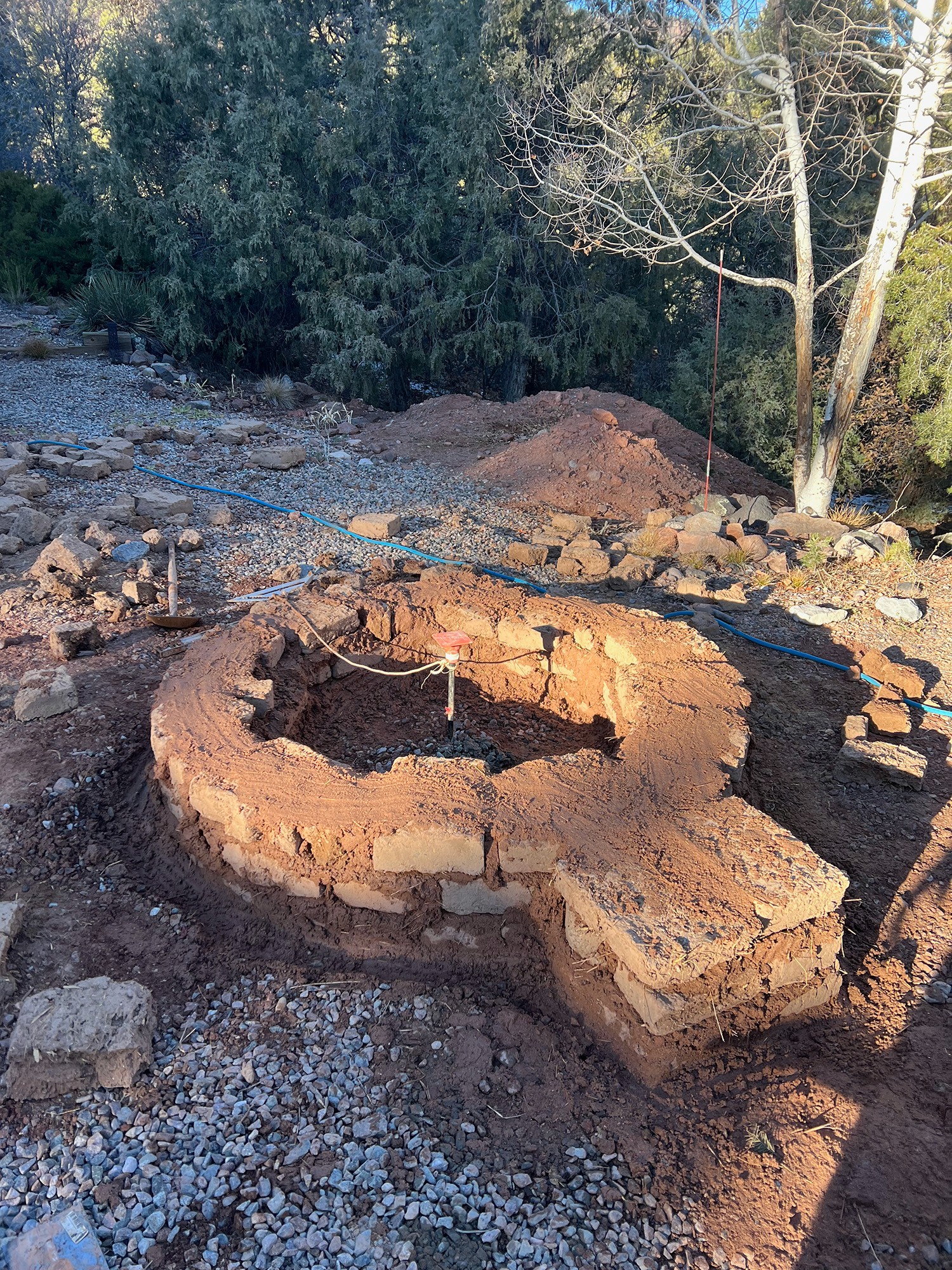
The first courses of adobe brick going up around the base.
The horno walls rising, course by course.
Working together on the build.

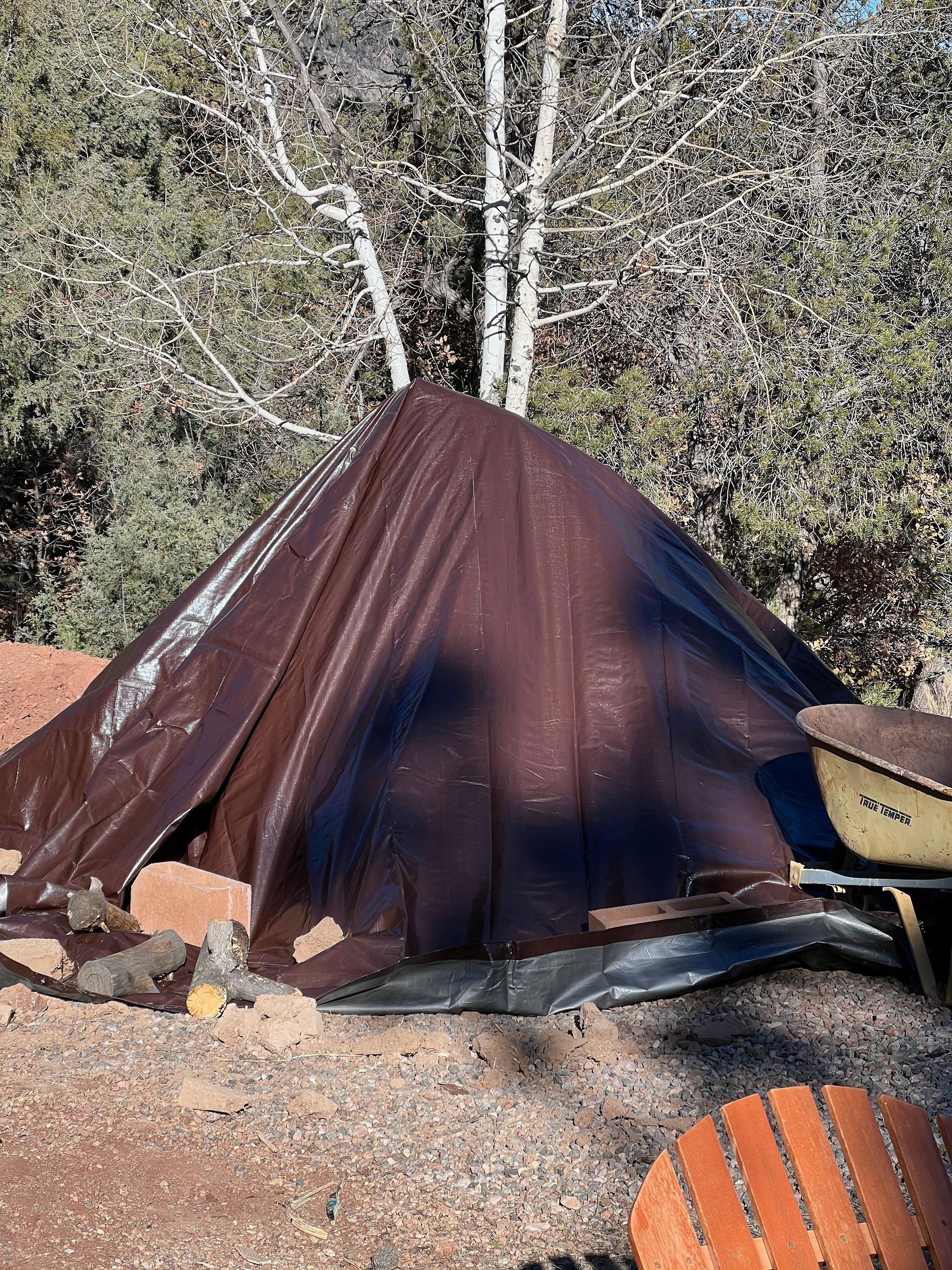
Wrapped and tarped for the night, kept warm by a heater safely framed away from the fabric.
Eye of the Horno would like to thank all workshop participants and our host Aaron and The Semilla Project for making this such a special week. And of course, a big thanks to everyone who showed up with their hands and their heart, whether for one day or the five. We look forward to offering more horno workshops in the near future!
Jemez Springs Horno Build
Eye of the Horno, led by builder Amaury Bargioni, partnered with The Semilla Project in early December to lead a week-long Horno Building Workshop. The workshop was held at The Semilla Project's retreat property in Jemez Springs — the space where the organization gathers, a fitting home for a horno built to nourish the community for years to come.
The partnership was a natural fit: Eye of the Horno is dedicated to sharing its passion for earth-building and wood-fired cooking through horno building services and community workshops, while The Semilla Project is dedicated to developing the next generation of community leaders through land-based, culturally-grounded learning. Building a horno by hand, together, over 5 days, is exactly the kind of hands-on, land-rooted work both organizations are built around.
Around 5 to 8 participants took part in the workshop, most of them interns from The Semilla Project, along with a few community members — some traveling from as far as Albuquerque — who came out to join in. Together the group worked through every stage of building a horno by hand — digging and pouring the foundation, building and filling the base, and raising the walls course by course until the dome took shape.
Building in December meant working around the cold — and keeping the horno from freezing overnight. The adobe bricks themselves were already fully cured, but the mud mortar holding each course together was still fresh and wet as the walls went up. If that mortar froze and expanded before it had a chance to dry and bond the bricks together, it could crack, weakening the joints between courses. That's a big part of why adobe construction is traditionally done in warmer, drier seasons — building through a Jemez Springs December meant taking on that risk deliberately and managing with intention. Each night we wrapped the horno in a concrete blanket and tarp, running a small space heater inside a frame built specifically so it wouldn't touch the tarp (and let it catch on fire). Every morning, we would arrive to find the horno still warm to the touch from the night before — a reassuring, satisfying sign that the setup was doing its job.
The first courses of adobe brick going up around the base.
The horno walls rising, course by course.
Working together on the build.
Wrapped and tarped for the night, kept warm by a heater safely framed away from the fabric.
Eye of the Horno would like to thank all workshop participants and our host Aaron and The Semilla Project for making this such a special week. And of course, a big thanks to everyone who showed up with their hands and their heart, whether for one day or the five. We look forward to offering more horno workshops in the near future!