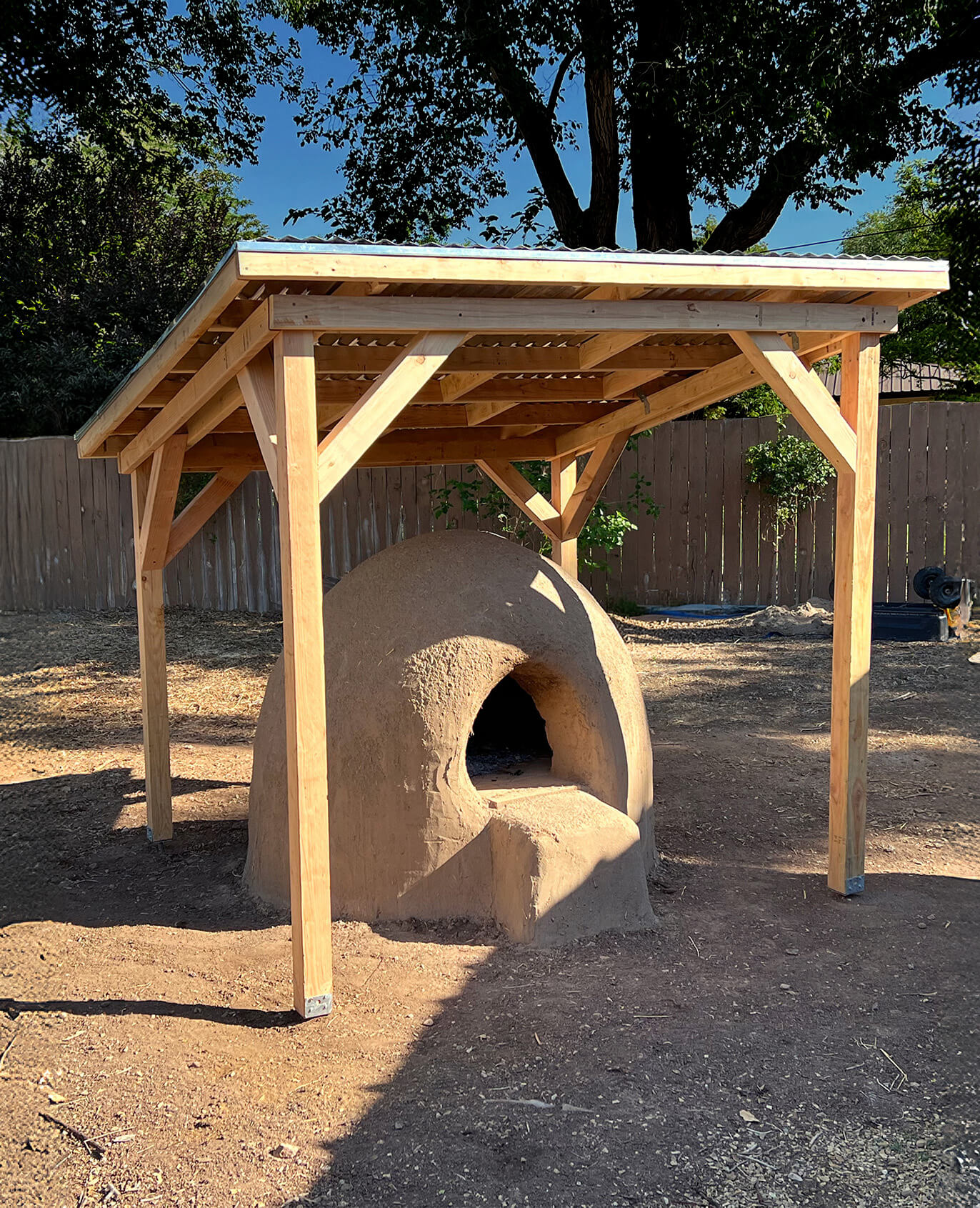
Building a Community Horno in Gallina
Workshop at the San Joaquín del Río de Chama Land Grant with the Youth Conservation Corps

A large Horno for the Land Grant's reborn community kitchen
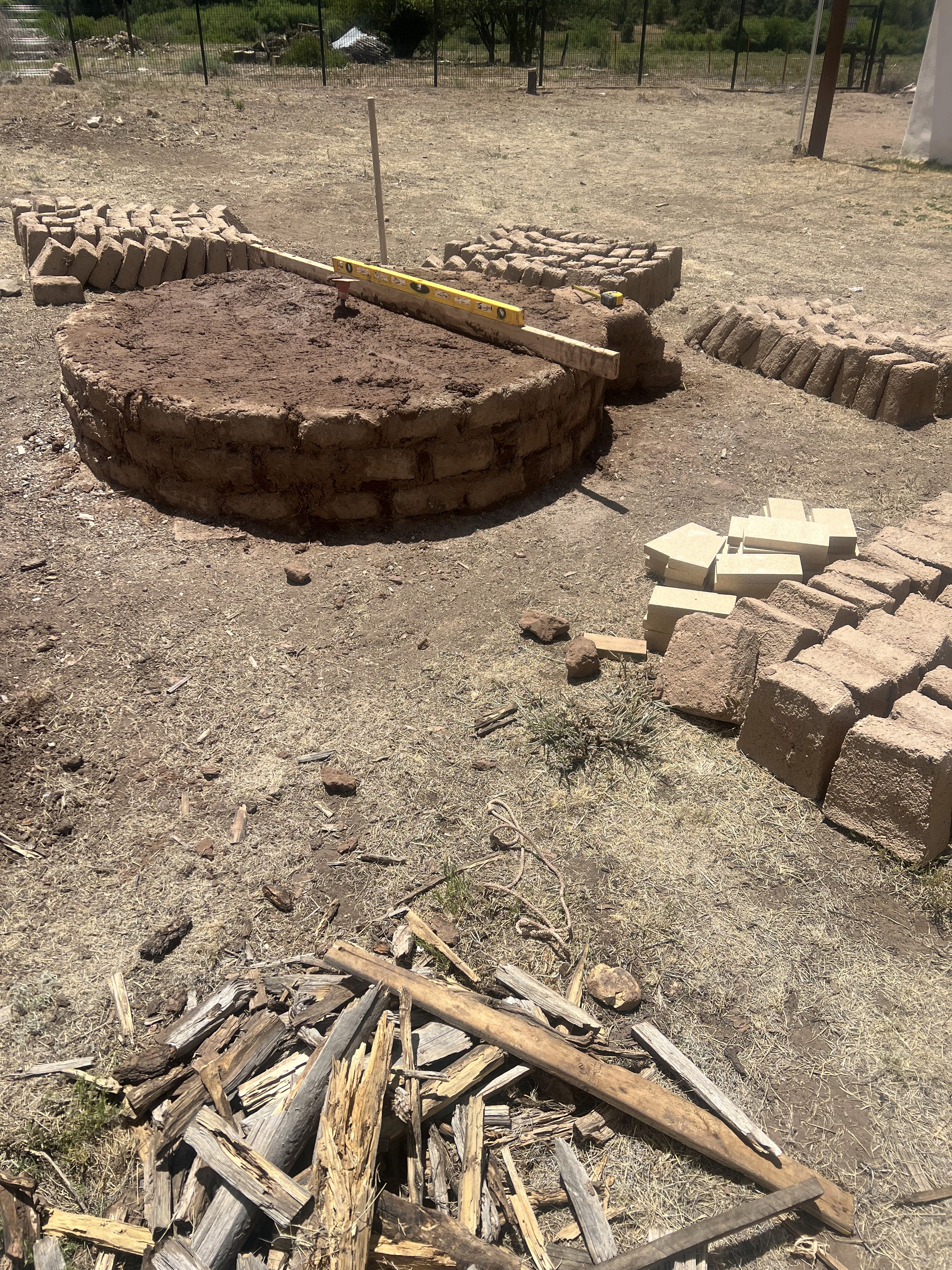
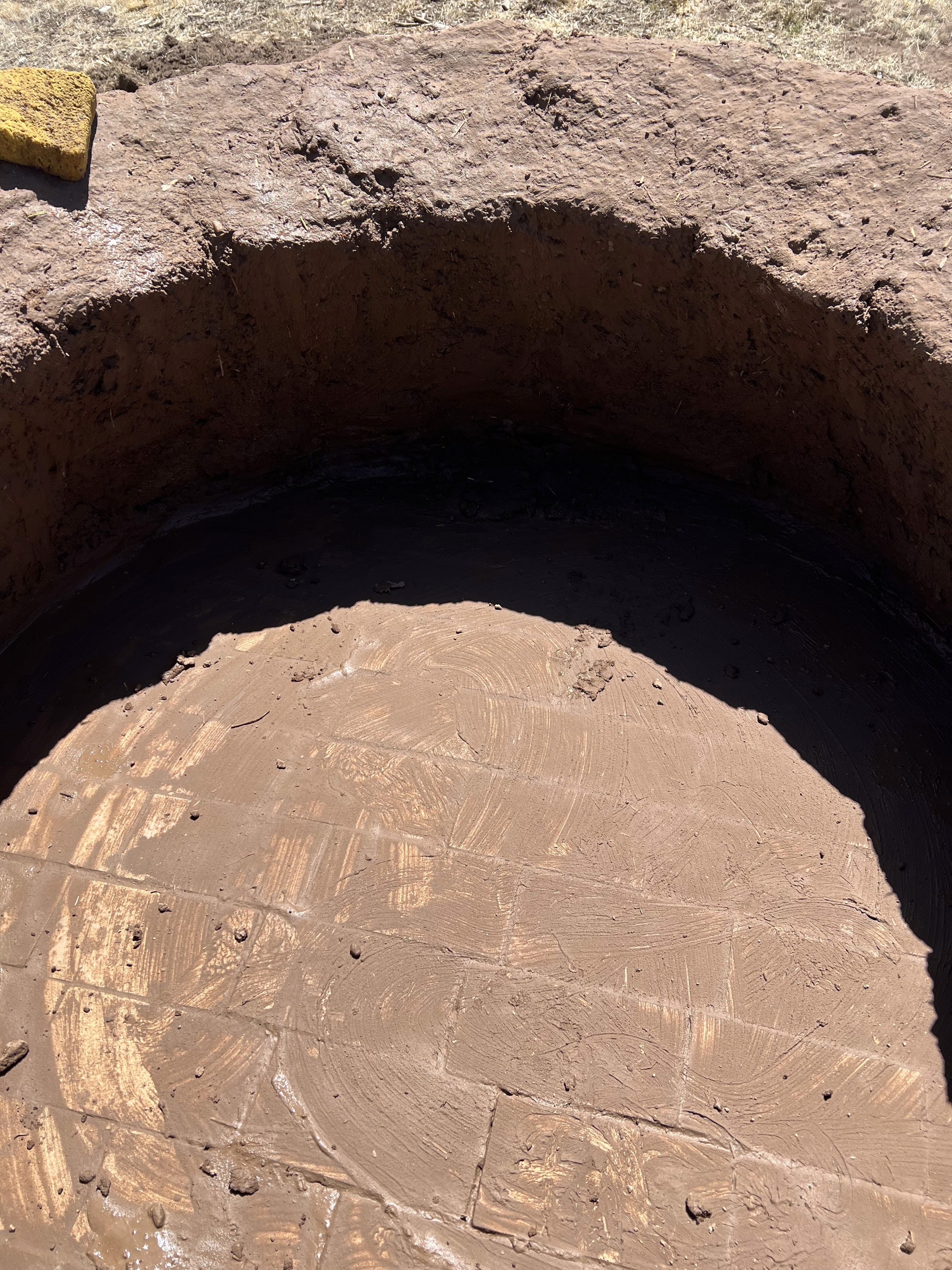
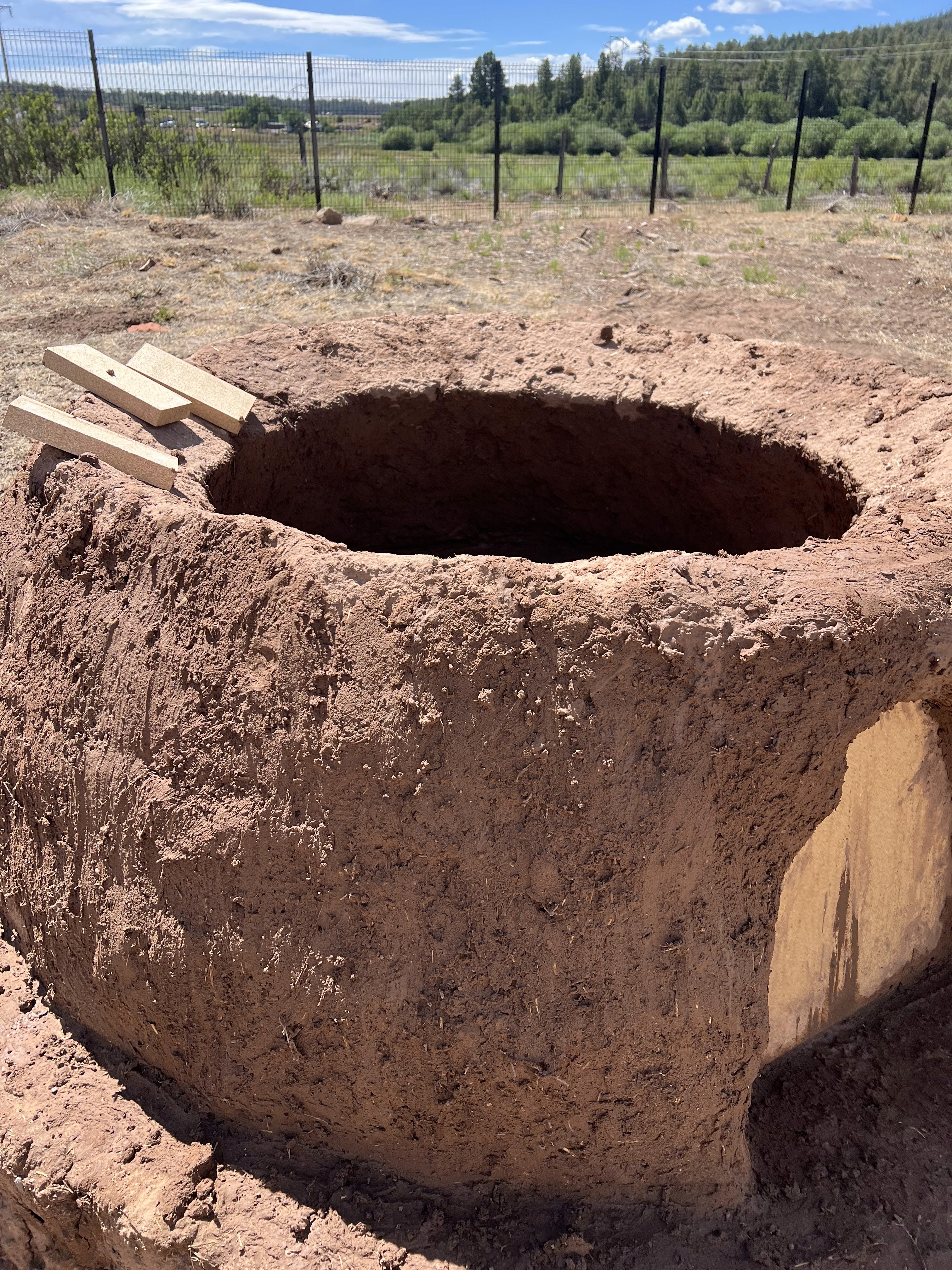
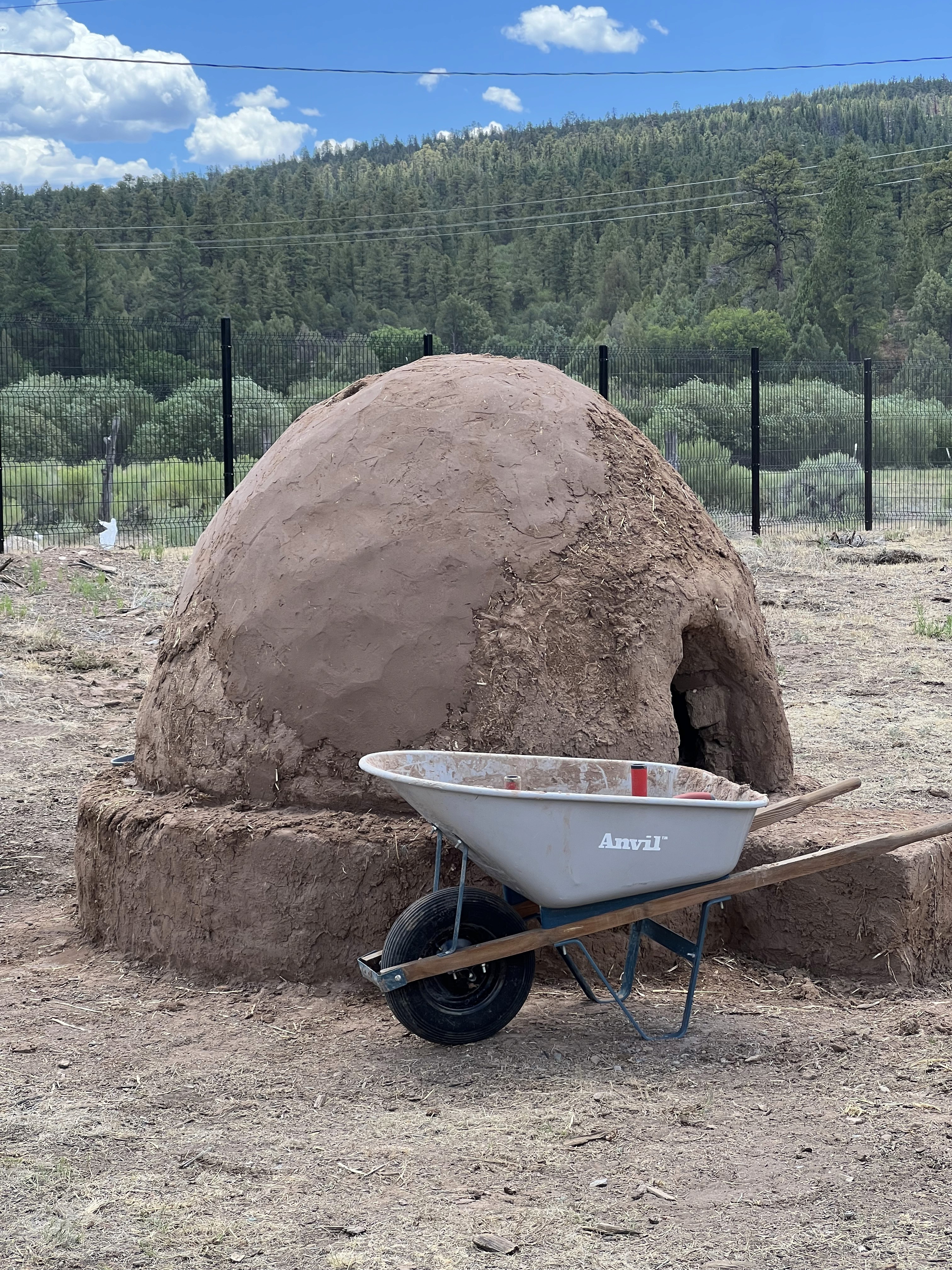
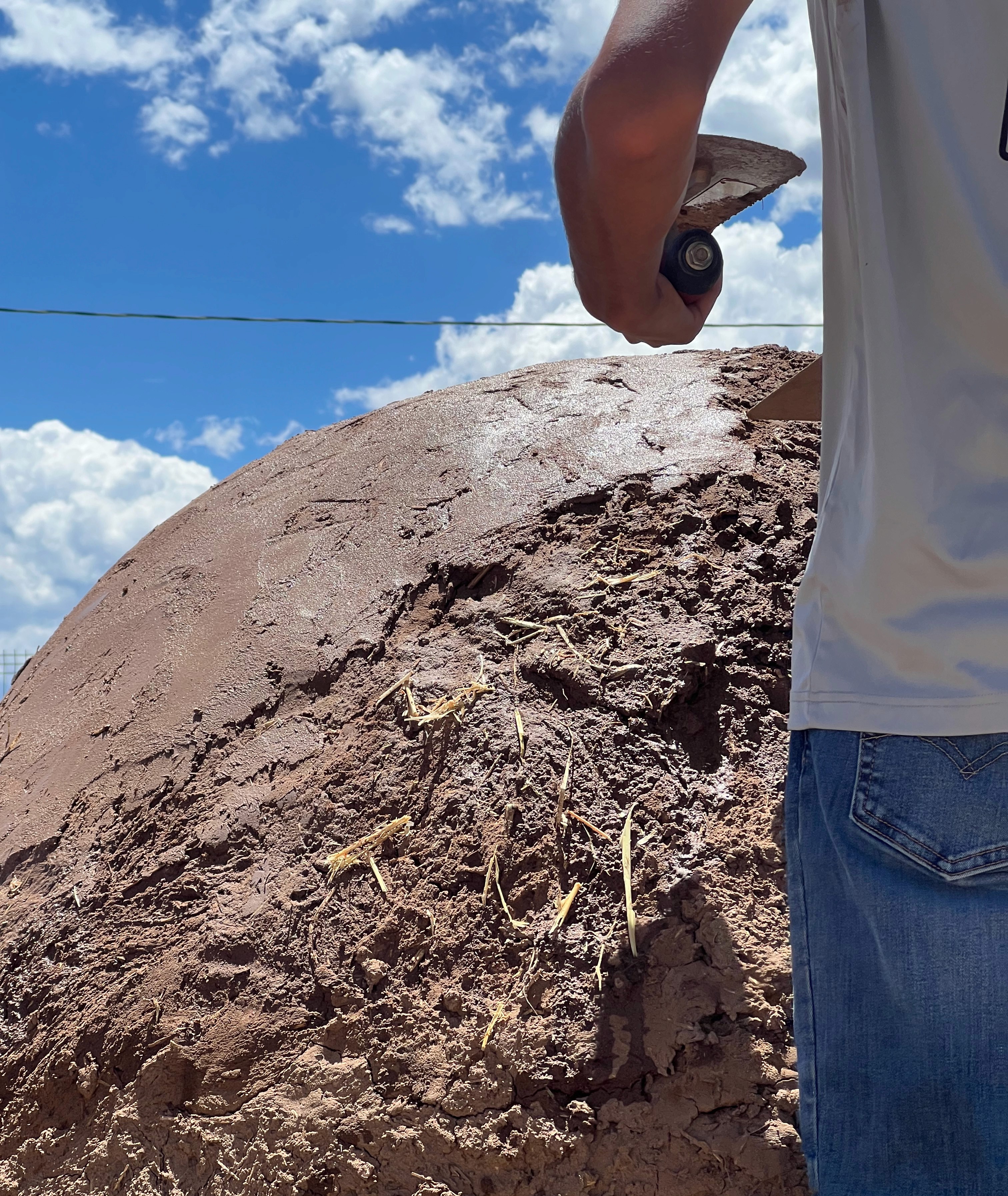
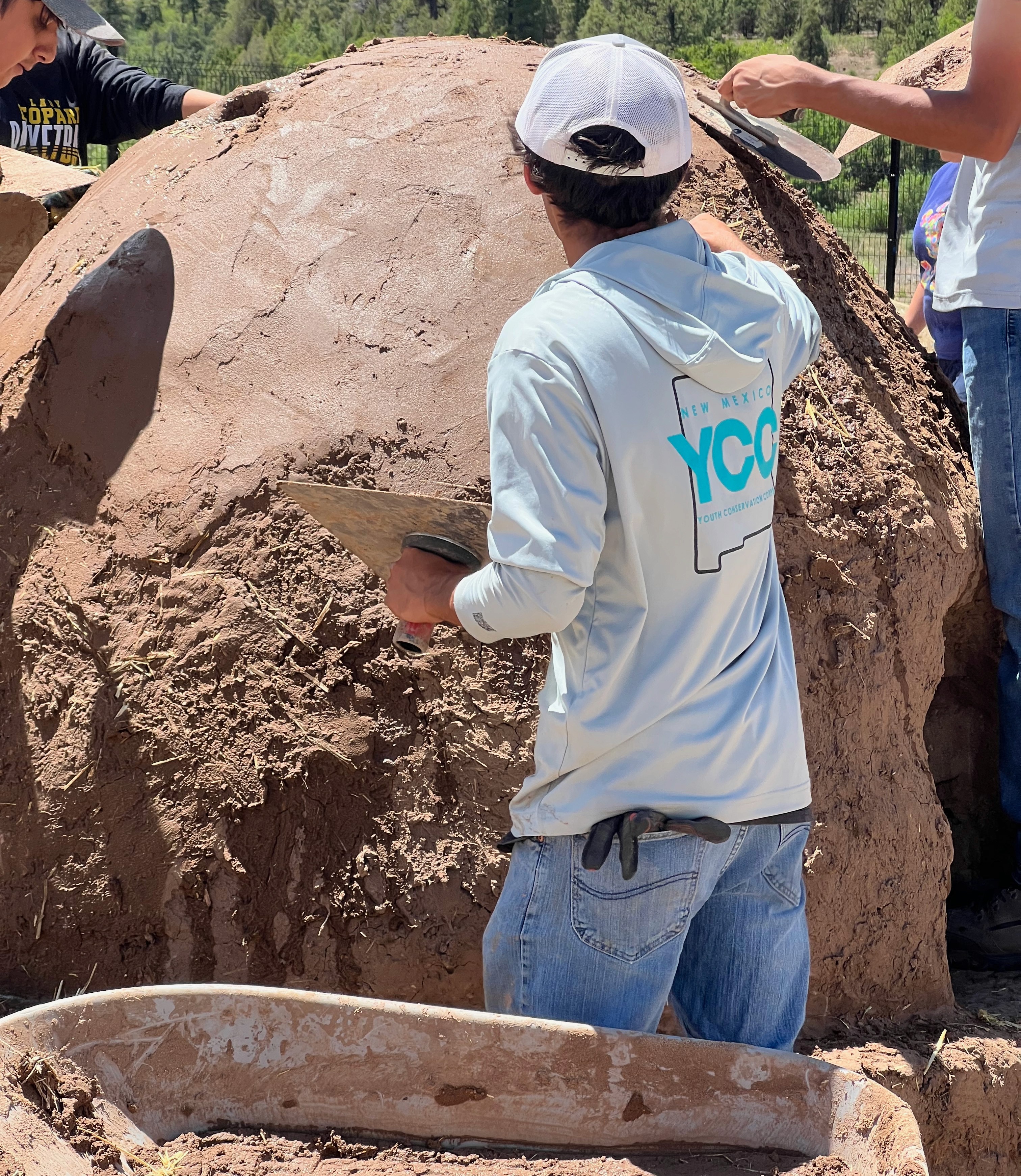
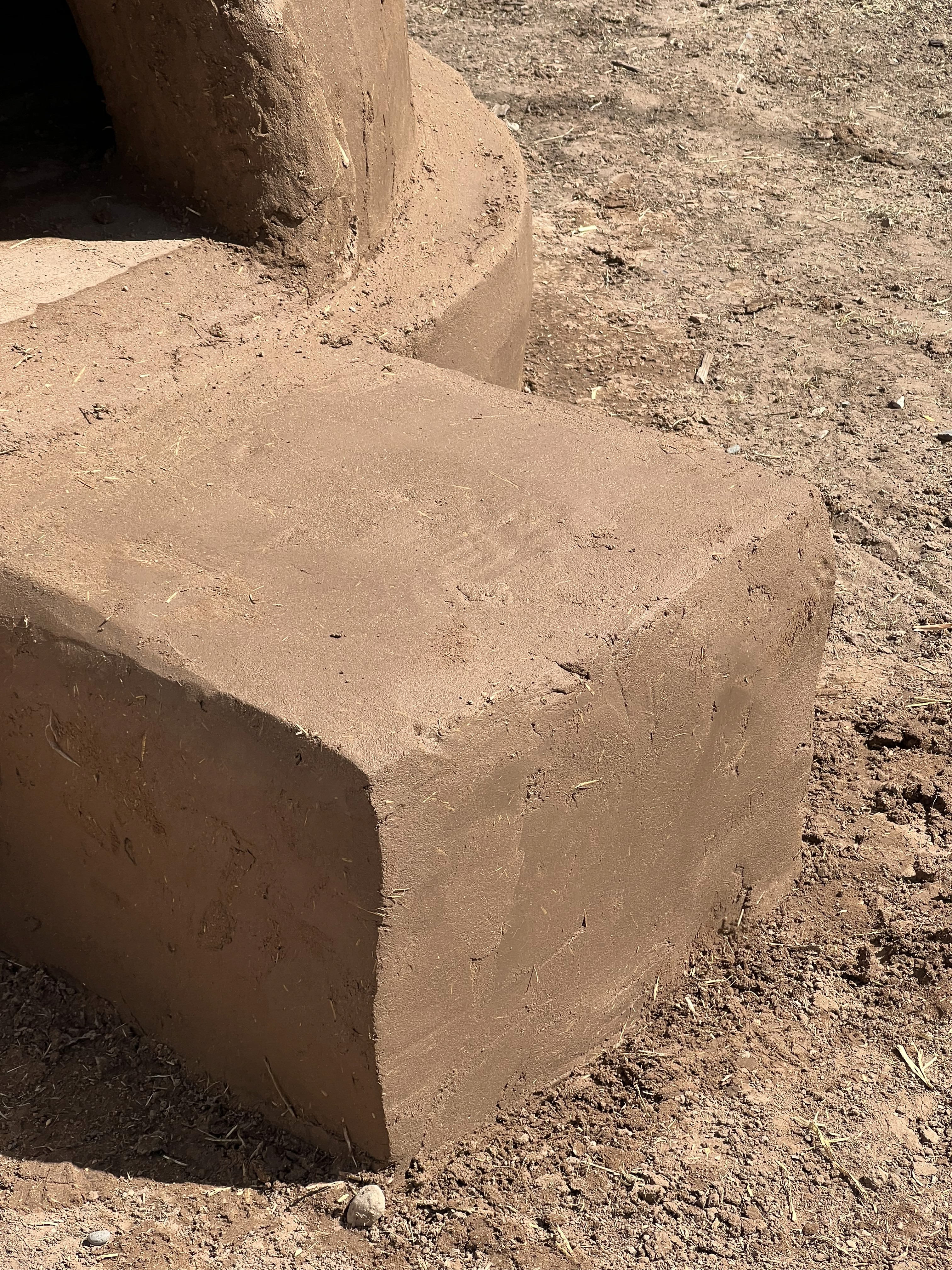
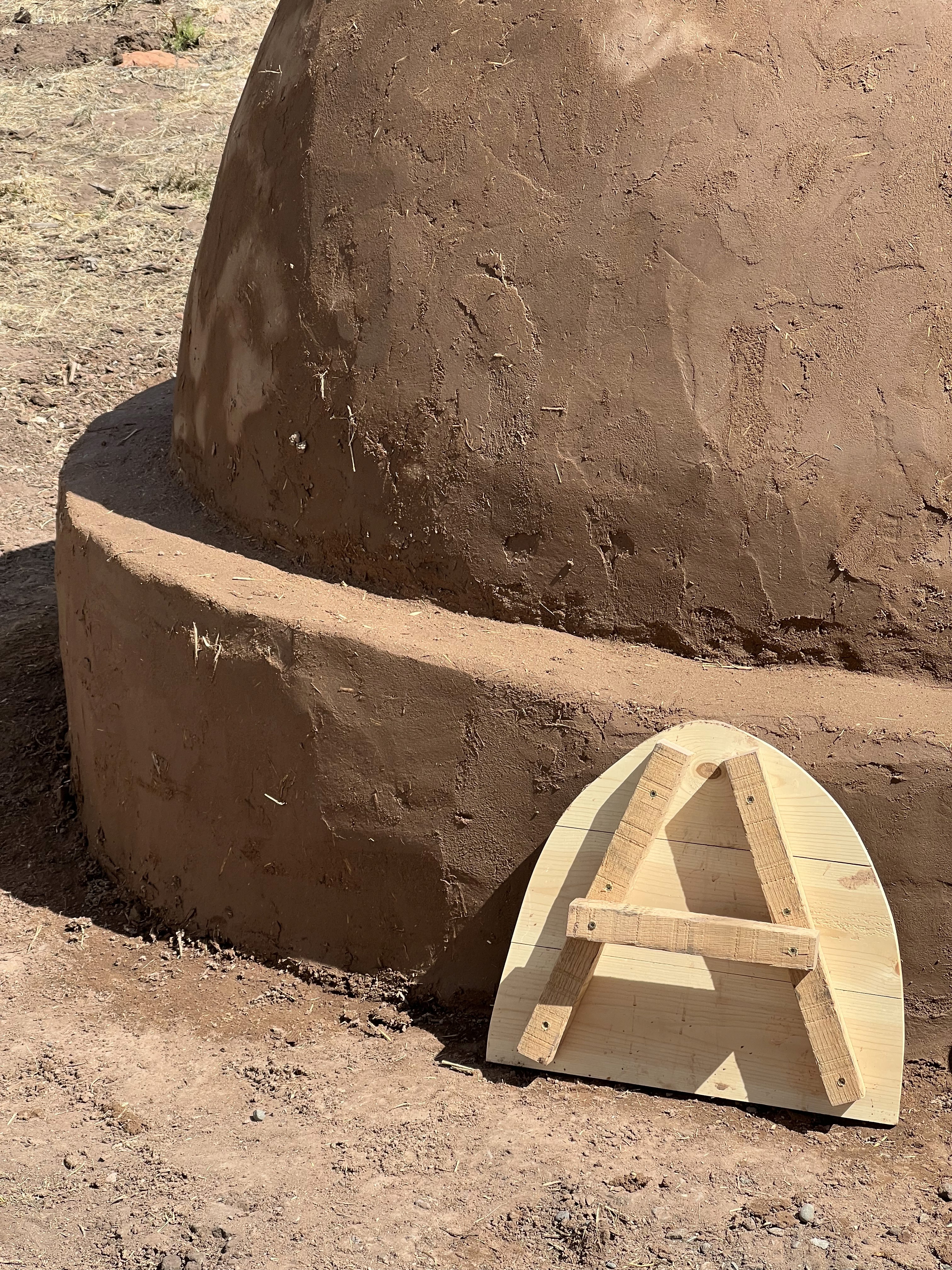
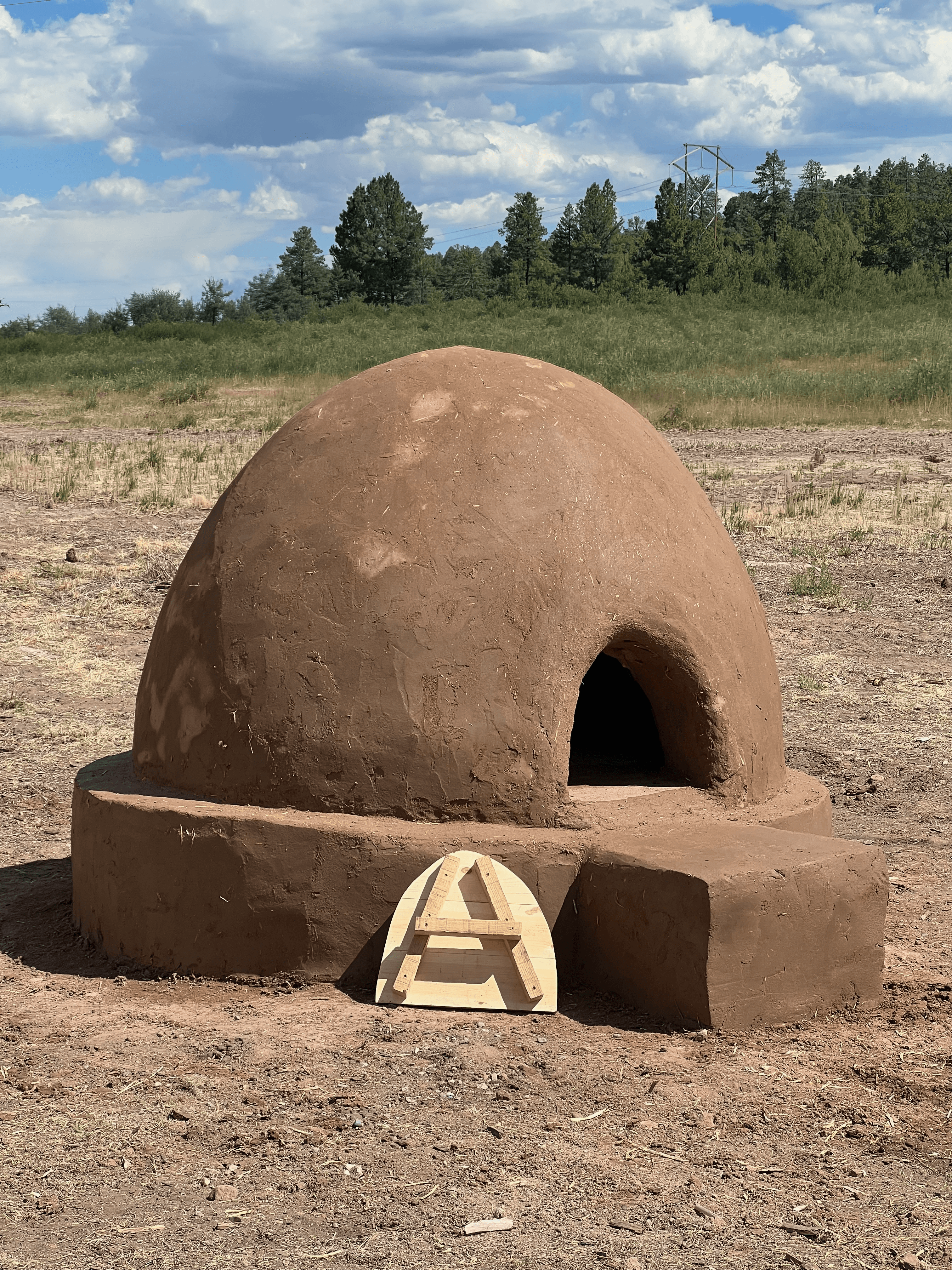
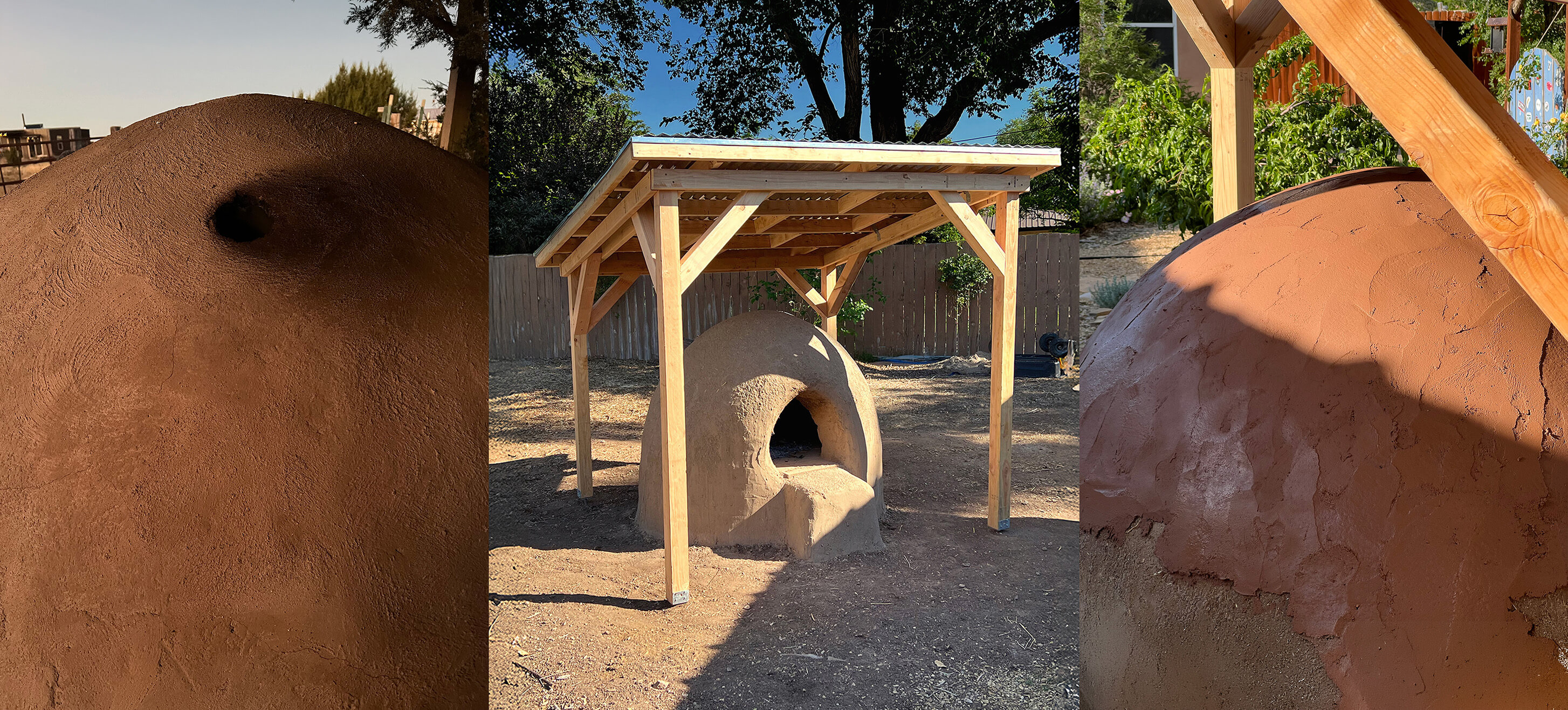
Eye of the Horno spent two Thursday - Friday sessions this July in Gallina, working with a crew of about eight youths to build a community Horno from the ground up for the San Joaquín del Río de Chama Land Grant. The finished oven measures 84 inches across — a big one, built to feed a community rather than a household — and it will serve as part of the Land Grant's community kitchen.
The project came to us through Monica Rodriguez, the Land Grant's Vice President and who acts as the Youth Conservation Corps coordinator. She described what they were after plainly: a community Horno of the kind that "probably had been in use there in the community for hundreds of years but it's now gone away," and a chance to "renew that practice" by teaching young people how to do it themselves. As Monica describes it “the ultimate goal for our YCC program is to empower youth by connecting ancestral knowledge to modern career paths that will strengthen our own community."
A little history
The San Joaquín del Río de Chama Land Grant was made to the ancestors of today's heirs in August of 1806 by Spanish Governor Joaquín del Real Alencaster. By 1860 several distinct communities had settled across the merced, with a combined population of well over 800 residents. Families cultivated the narrow strips of land in the river valleys, pastured livestock, and gathered what they needed from the surrounding common lands. Hornos would have stood in those villages as ordinary equipment — the way you baked bread.
Most of that land was lost. A resurvey commissioned by the newly installed U.S. Court of Private Land Claims cut the grant down to 1,422 acres along the Rio Chama, and the 1905 patent went not to the settling families but to the Rio Arriba Land and Cattle Company, whose principals set about removing the families living on it. By 1905 the federal government recognized only about 1,500 acres along the Rio Chama as belonging to the land grant, and even that ended up in company hands. The rest became national forest.
The Land Grant has been steadily reclaiming ground ever since — not always literally, but in practice and access. In March of this year, the San Joaquín Land Grant and the Santa Fe National Forest signed a first-ever Memorandum of Understanding to improve coordination and collaboration on land and natural resource management. Land Grant president Leonard Martinez has spent nearly every day since clearing the historic Acequia Madre de Cañon de Chama, working to reconnect it to the Rio Chama and bring water back to orchards his ancestors first planted more than 200 years ago.
Gallina itself sits at 7,563 feet in Rio Arriba County, a village of a few hundred people. It's high, dry country, and the older ways of building and cooking here were shaped by exactly that. A Horno is a good fit for a place like this: it's made from what's underfoot, it runs on wood, and it doesn't need anything the community can't provide for itself.
The Horno was built start to finish in four working days. And now eight people who know how to do this. There are fewer and fewer Horno builders around, and the trade is genuinely struggling to stay alive as the older generation retires. Every workshop is a chance to move that knowledge into younger hands before it thins out any further.
Eye of the Horno would like to thank Monica Rodriguez, the YCC crew, and the San Joaquín del Río de Chama Land Grant for having us. We're looking forward to going back to Gallina for the Land Grant’s feast in the fall during which hopefully the Horno will be put to use.